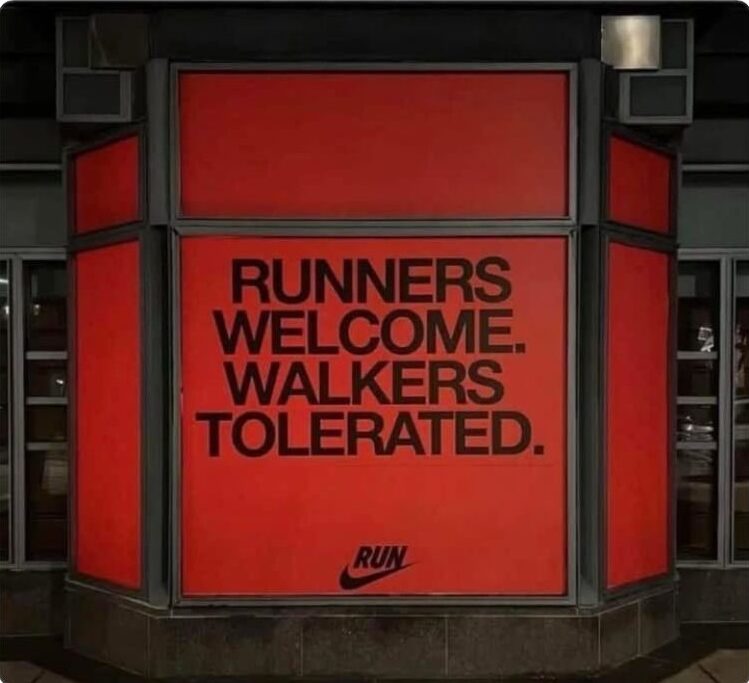
Image from an Instagram post by Robyn Michaud from April 17, 2026, shows a Nike ad along the route of the Boston marathon. (@giiwedinanang_kwe/Instagram)
Even the world’s strongest brands get it wrong sometimes. Nike’s failed advertisement during the Boston Marathon in 2026 is a clear reminder that brand power does not protect against messaging mistakes.
Nike placed a bold billboard on their Newbury Street store that said “Runners welcome. Walkers tolerated.” The ad was intended to be bold and motivating, speaking to high-performance athletes in one of the most prestigious running events in the world. Instead, it was perceived by many as dismissive and exclusionary, particularly toward runners who walk part of the race, adaptive athletes, and non-elite participants. The backlash was swift, and Nike removed the ad and issued a public apology.
From a marketing and branding perspective, the situation offers several important lessons.
Marathons are not just elite sporting events. They are emotional milestones for thousands of participants with different abilities, goals, and stories. While Nike aimed to speak to competitive runners, the message failed to account for the broader running community that strongly identifies with events like the Boston Marathon.
If a message is public, it will be interpreted by everyone who feels part of that culture or would like to be part of that culture.
Nike’s intention may have been playful or provocative, but branding is judged by impact, not intent. A single word can shift a message from motivating to alienating. In this case, wording that implied hierarchy and tolerance rather than inclusion undermined Nike’s long-standing positioning around empowerment and accessibility.
If your brand stands for inclusion, every campaign must reflect that.
Nike has built decades of equity around the idea that sport is for everyone. When a campaign contradicts that belief, the disconnect is immediately visible. Strong brands are held to higher standards, and audiences notice inconsistency faster than ever.
This is where internal brand governance matters. Campaigns should be reviewed not only for creativity but for value alignment.
Nike acted quickly by removing the ad and acknowledging the mistake. While this didn’t erase the backlash, it helped contain reputational damage. In today’s environment, silence or defensiveness often causes more harm than the original error.
Mistakes happen, but how a brand responds is now part of the brand story. Don’t panic, though, just respond calmly if this happens!
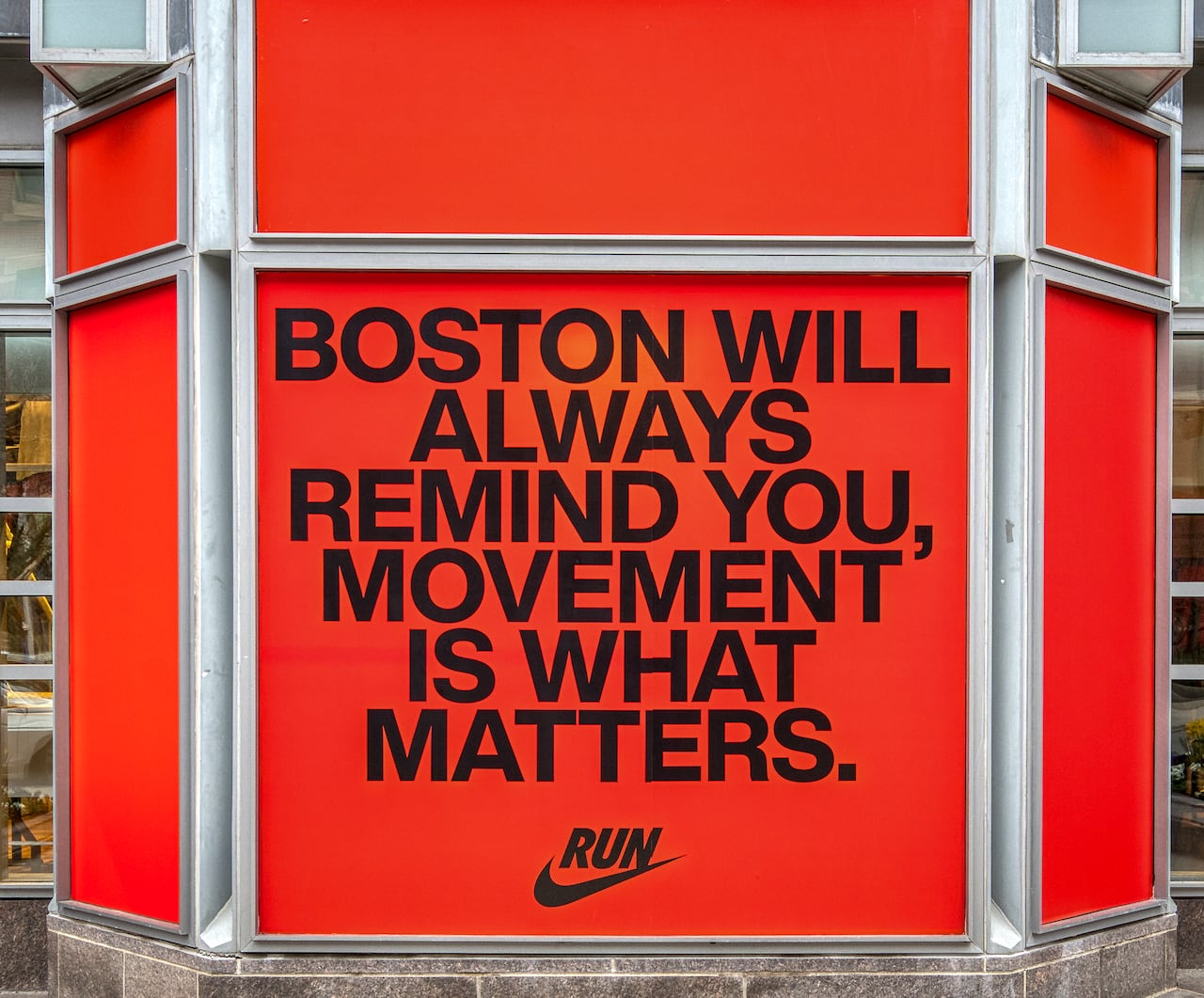
Image: Updated Nike billboard after the backlash
One of the most telling outcomes was how quickly the public reframed the message into something more inclusive. Competing brands were also quick to jump on board. Inclusive messaging isn’t just ethically sound, it’s a competitive advantage.
Nike’s Boston Marathon ad wasn’t a failure of creativity, but a failure of perspective. When we work so closely with our brand and people of the same mind, it is easy to forget to look at campaigns from other perspectives. For marketers and brand leaders, the lesson is clear: bold ideas still need empathy, context, and alignment with brand values.
In a world where audiences expect brands to stand for something, who you include matters as much as what you say.
We use cookies to improve your experience on our site. By using our site, you consent to cookies.
Manage your cookie preferences below:
Essential cookies enable basic functions and are necessary for the proper function of the website.
These cookies are needed for adding comments on this website.
Google reCAPTCHA helps protect websites from spam and abuse by verifying user interactions through challenges.
Statistics cookies collect information anonymously. This information helps us understand how visitors use our website.
Google Analytics is a powerful tool that tracks and analyzes website traffic for informed marketing decisions.
Service URL: policies.google.com (opens in a new window)
You can find more information in our Privacy policy and .
Ota rohkeasti yhteyttä sähköpostitse, jos sinulla on lisäkysymyksiä tai tarvitset apua juuri sinulle sopivan paketin kokoamisessa!
Tai liity sähköpostilistallemme saadaksesi viimeisimmät uutiset ja tarjoukset (enintään yksi sähköposti kuukaudessa):
Tilaamalla uutiskirjeemme suostut vastaanottamaan meiltä ajoittain sähköpostiviestejä, joissa kerromme uusimmista uutisista, resursseista ja palveluista. Voit peruuttaa tilauksen milloin tahansa klikkaamalla sähköpostiviesteissämme olevaa linkkiä. Lisätietoa henkilötietojesi käsittelystä löydät tietosuojakäytännöstämme.